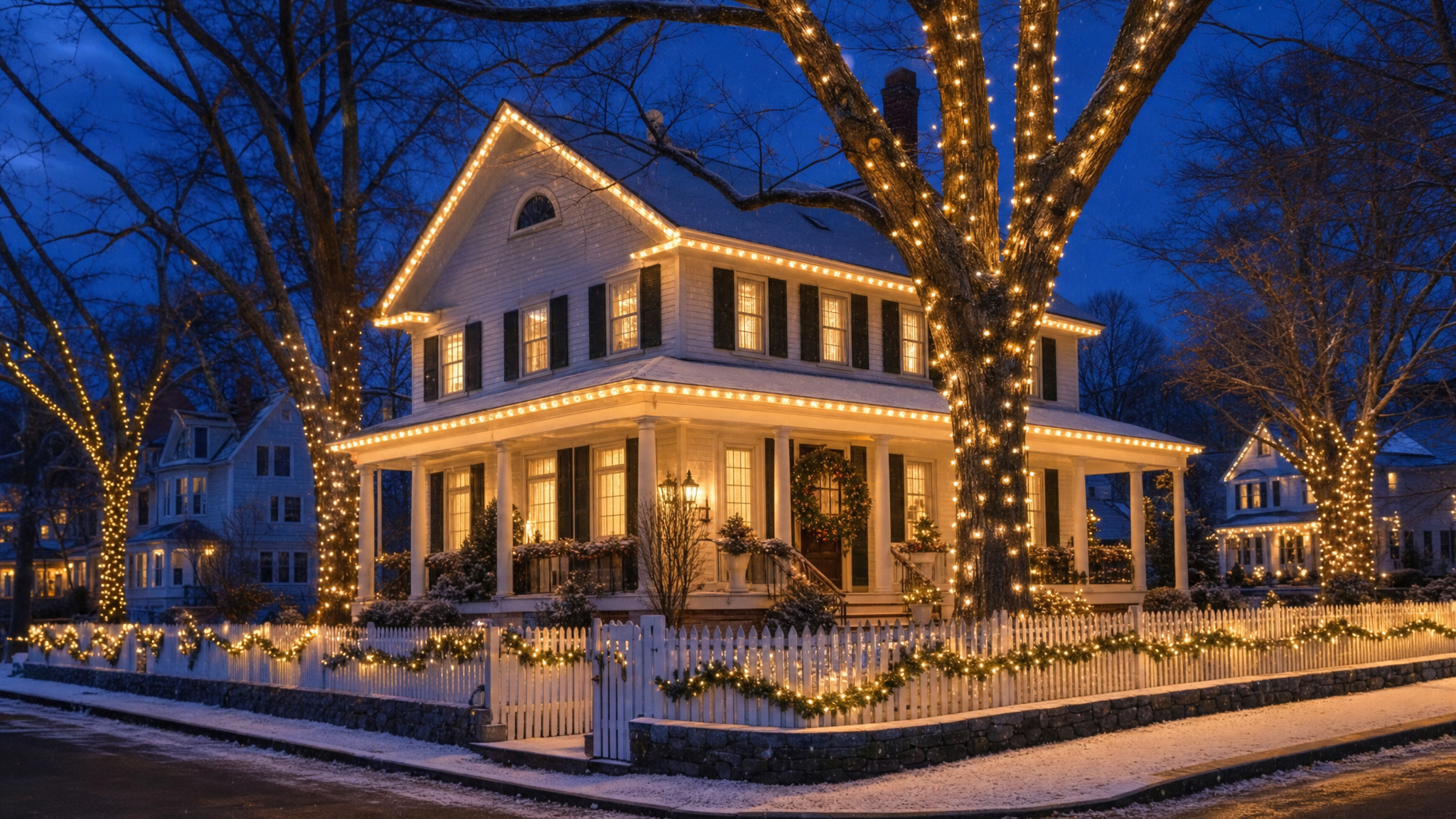
Storm season runs December through February, which means the install window is short and decisions you make in September matter a lot.
New England weather sets the calendar for everything we do. If you have lived here long, you know how quickly the season turns from a sunny October weekend into a December storm that drops a foot of snow on the roof.
The Install Window Is Short
Our primary install season runs October through early December. After Thanksgiving the available window narrows fast, and once the first major Nor'easter arrives we cannot safely put crews on roofs. Booking your install for the second week of December is a gamble. Booking in October is not.
What a Nor'easter Actually Does to a Roof
A typical Nor'easter brings sustained winds, heavy wet snow, and often a layer of ice. For roofline lighting, the failure modes are usually one of three things: a fixture that was not rated for the load comes loose, a wiring run that was not properly secured tears, or a connection point that was not weather-sealed shorts. Our install method is built to avoid all three.
Why We Push Customers to Book Early
The honest answer is that we cannot serve every customer who calls in late November. We can serve a customer who books in September. Booking early is not a sales pressure tactic, it is how we make sure we have time to design your install properly, do the site visit in daylight, and get on your roof before the weather closes us out.
What Happens If a Storm Hits Mid-Season
Your lights stay up. They are rated for the load. After major storms we run service routes through affected zip codes, primarily north of Boston and through the Merrimack Valley, to inspect installs and replace anything that needs replacing. In-season service is included with every contract.
What This Means For You
If you are reading this in September or October, you are right on time. If you are reading this in late November, call us anyway and we will tell you honestly whether we can still get to you.